How Much Is My CNC Machine Worth in Austria?
Learn which factors shape CNC machine value in Austria, how buyers assess condition and specification, and when a professional valuation makes sense.
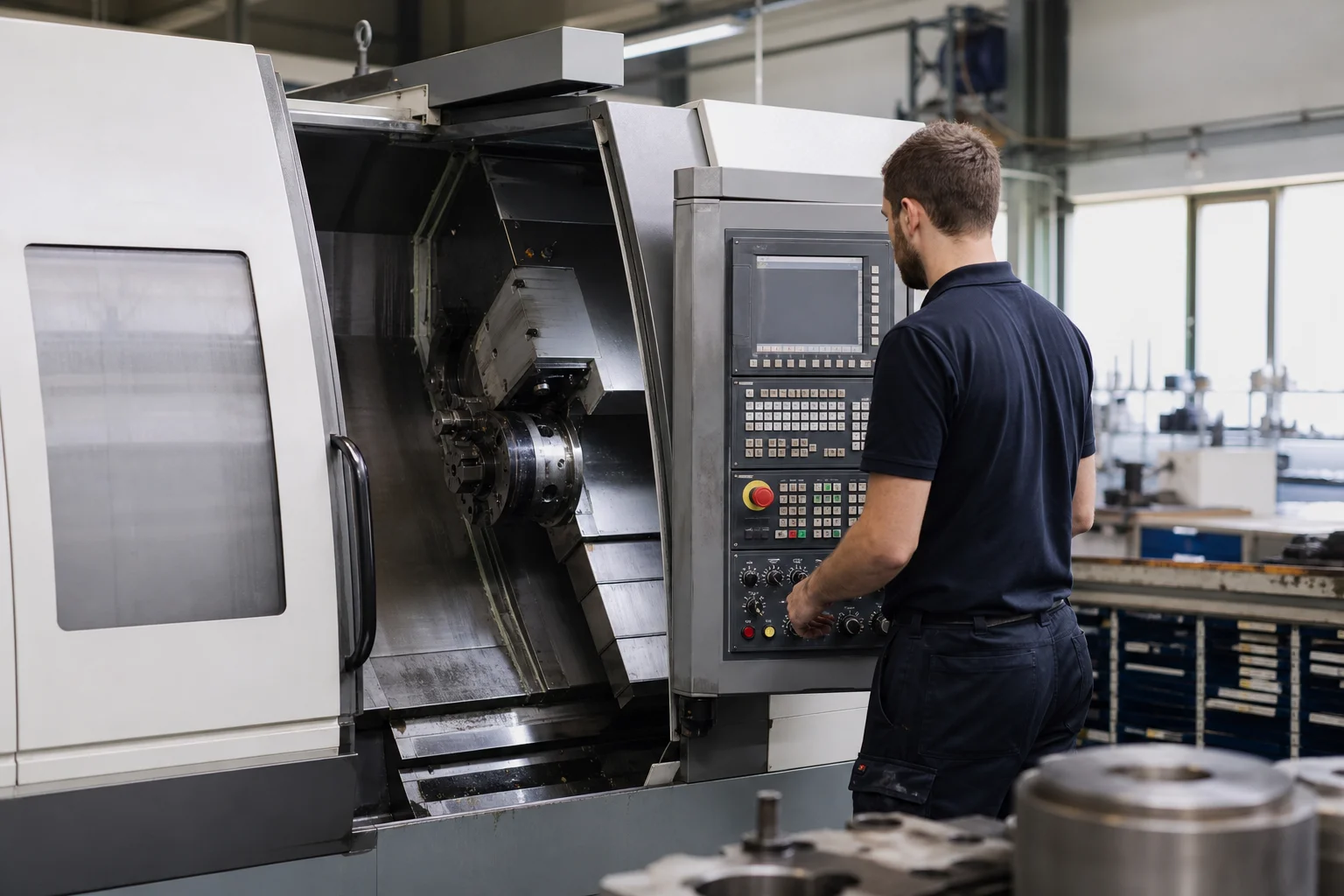
If you are asking how much your CNC machine is worth in Austria, the honest answer is that there is no single formula. Value depends on the machine’s technical specification, condition, maintenance history, control system, tooling, and how attractive it is to a buyer who wants to put it back into production quickly.
For Austrian owners, there is also a practical cross-border element. A machine does not need to find a buyer only within Austria. Well-maintained CNC metalworking machines can attract interest from buyers in neighboring markets as part of a wider European purchasing network, but transport, dismantling, installation, and commissioning all influence what a buyer is willing to pay.
What determines CNC machine value in Austria?
A CNC machine’s market value is usually a combination of technical usefulness and commercial ease. A machine that is still productive, complete, and easy to integrate into a workshop is generally more attractive than a machine that looks similar on paper but needs major work before it can be used.
The main value drivers are:
- Machine type and process: turning, milling, machining center, grinding, EDM, and other CNC metalworking applications are valued differently.
- Brand and model reputation: some machines are easier to place because buyers already know the control logic, support structure, and typical reliability.
- Size and capacity: table size, axis travel, spindle power, chuck size, turning diameter, and similar specifications matter.
- Control system: a modern or widely supported control can improve buyer interest, but it does not automatically create value on its own.
- Condition: wear, backlash, spindle condition, accuracy, and service history matter more than the build year alone.
- Completeness: tooling, fixtures, chip conveyor, coolant system, probing, and automation can help, but only if they are relevant and functional.
- Dismantling complexity: a machine that is hard to remove, move, or reinstall may be worth less to a buyer.
This is why the question “How much is it worth?” is really a question about how usable the machine is for the next owner.
Why build year and spindle hours are not enough
Many owners start with the build year and spindle hours, but neither figure tells the full story.
A newer machine can still have poor value if it was heavily loaded, poorly maintained, or damaged. A much older machine can remain attractive if it was used carefully, serviced regularly, and still holds tolerance.
Spindle hours are useful because they indicate usage, but they do not independently determine remaining life. A lower number does not automatically mean a better machine, and a higher number does not automatically mean the machine is unattractive. Buyers also look at how those hours were accumulated, what work was done, and whether the machine has evidence of proper maintenance.
The same applies to the original purchase price. A high original investment does not guarantee strong current value. The market prices the machine as a used production asset, not as a memory of what it once cost new.
What Austrian buyers typically want to know
Whether a buyer is in Austria or elsewhere in Europe, the questions are often very similar:
- Does the machine run reliably?
- Can it still hold the required tolerance?
- Is the control system current enough for their production environment?
- Are key components original, repaired, or replaced?
- Is the machine complete and ready for inspection?
- Is there any automation or tooling that helps production immediately?
For a workshop or factory in Austria, a machine that can be inspected and demonstrated under power is usually easier to evaluate than a machine with limited documentation and no test run. Clear photos, service records, and a short technical description reduce uncertainty and make a valuation more credible.
How location in Austria can influence value
Austria’s position in Central Europe can be an advantage when selling CNC metalworking machines. The country is well connected to nearby industrial markets, so a machine in good condition may attract interest beyond the local area.
That does not mean location automatically increases value. It means the buyer pool can be broader if the machine is suitable for relocation and installation. For some machines, transport from Austria to another European country is straightforward. For heavy or highly specialized equipment, however, dismantling, rigging, transport permits, foundation requirements, and reinstallation costs can materially affect the net price.
In practice, a buyer often thinks in terms of total landed cost: purchase price plus removal, logistics, and commissioning. The higher those costs are, the more carefully the buyer will discount the machine’s value.
Condition details that matter most
A good valuation starts with the parts of the machine that affect production quality and downtime risk.
Pay attention to:
- spindle condition and noise
- axis accuracy and repeatability
- backlash or positioning issues
- way covers, lubrication, hydraulics, and pneumatics
- coolant and chip handling systems
- control alarms or recurring faults
- documentation, manuals, and spare parts availability
- signs of crash damage or poor repair work
Machines that have been well maintained and can be demonstrated under power usually inspire more confidence than machines that are only described from memory. Even small defects can have a noticeable effect if they create uncertainty about future downtime.
Options and accessories: useful, but not automatically valuable
It is common to list many extras when estimating a machine’s value. Some of those extras do add practical value, but not every option does.
Tooling, probes, automation, tailstocks, pallet systems, rotary tables, and specific software packages can all matter. Yet their value depends on whether they are complete, working, compatible, and useful to the next owner.
A buyer in Austria or elsewhere will usually ask one question: does this option help me produce faster or cheaper? If the answer is yes, it may improve the offer. If it is outdated, incomplete, or too specific to the previous production setup, it may have little effect.
When a professional valuation makes sense
A professional valuation is worth considering when an investment, replacement, or disposal decision depends on a realistic market estimate:
- the machine is too valuable to guess on
- multiple machines must be sold or replaced
- ownership, accounting, or disposal decisions depend on an informed estimate
- the machine is specialized and the market is not obvious
- you want to know whether sale potential exists inside Austria or across Europe
This is especially useful when the machine is still operational, because a functioning machine can often be assessed more accurately than an inoperative one. Even then, no valuation should pretend to be exact without inspection.
How Machine.nl approaches CNC valuation
Machine.nl focuses on used CNC metalworking machines and works through a European purchasing network. For Austrian owners, that means the question is not only whether a machine has local resale interest, but whether it is a candidate for professional review and, where appropriate, a direct purchase opportunity.
The practical process is straightforward: you share the machine details, condition, and available documentation. A professional review then assesses technical appeal, marketability, and purchasing potential. That review should take into account the real condition of the machine, not just the headline specifications.
This approach is often more useful than trying to infer value from an advert, because asking prices are not the same as realized transaction prices. A market listing may look optimistic, but the final figure depends on condition, demand, and the cost of putting the machine back into productive service.
What to prepare before requesting a valuation
To get a realistic view of your CNC machine’s worth, prepare the following:
- Make, model, and year of manufacture.
- Control type and key technical specifications.
- Photos of the machine from several angles.
- Spindle hours and, if available, service records.
- Current condition, known faults, and maintenance history.
- Included tooling, fixtures, and accessories.
- Whether the machine can be tested under power.
- Your location in Austria and whether dismantling is possible.
The more complete the information, the less uncertainty there is in the review. That usually leads to a more credible estimate.
A practical rule for Austrian owners
If you are deciding whether to sell, replace, or keep a CNC machine, do not base the decision on age alone. Focus on usability, repair risk, and how easily the machine can be moved into a new production environment.
For many Austrian factories and workshops, the key question is not “What did it cost new?” but “What would a buyer pay for this machine in its current condition, including the cost and effort of relocation?” That is the right lens for a realistic valuation.
If you want a professional assessment of your machine’s purchasing potential, Request a CNC machine valuation.