How Much Is My CNC Machine Worth in the Czech Republic?
Understand what determines a realistic CNC machine value in the Czech Republic, from condition and control to demand, transport and resale potential.
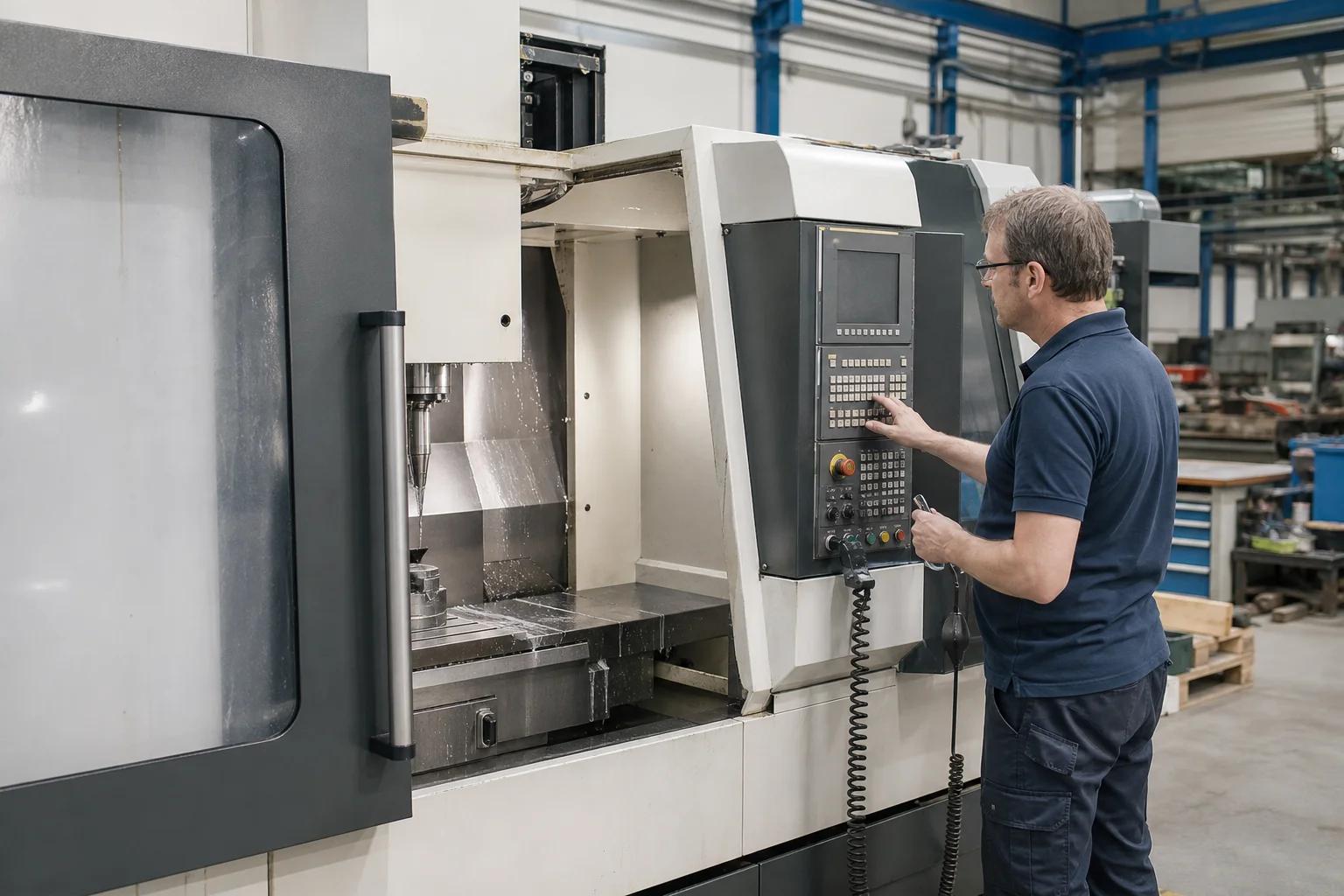
If you own a used CNC machine in the Czech Republic and are thinking about selling, the key question is not only “what did it cost new?” but “what would a serious buyer pay for it today?” The answer depends on specification, condition, service history, control system, configuration, and how easily the machine can be moved and put back into production.
A realistic used CNC machine value Czech Republic estimate should never rely on a single number such as build year or spindle hours alone. Those details matter, but they only make sense in context. A machine with relatively low hours can still be difficult to sell if it has worn mechanics, obsolete controls or missing tooling. A well-maintained older machine may still attract interest if it is reliable, complete and suitable for current production needs.
For owners in the Czech Republic, there is also a wider European angle. Many used CNC metalworking machines are bought across borders when the specification, condition and transport cost make sense. That means the local market is important, but it is not the only market. A machine in the Czech Republic may interest buyers in neighbouring countries if it is practical to dismantle, load and transport.
What determines CNC machine value?
A professional CNC machine valuation Czech Republic starts with the machine itself, not with an asking price that someone once listed online. Advertised prices are often not the same as actual transaction values. Real value depends on what a buyer can confidently use in production, what risks they must accept, and what additional cost they face after purchase.
The main factors are:
- Brand and model: Well-known builders with strong parts support and proven reliability usually draw more interest. That does not mean every machine from a famous brand is automatically valuable, but recognition helps.
- Year of manufacture: Build year is relevant, but it does not determine value on its own. A newer machine can still be poor in value if it is damaged or incomplete, while an older one may remain attractive if well kept.
- Spindle hours and machine hours: Hours help indicate usage, but they do not independently show remaining life. Maintenance, load profile and operating environment matter just as much.
- Control system: A current, familiar control is often easier to place than an obsolete system with limited support. The buyer’s willingness to take on programming and service risk matters.
- Configuration and travel: Axis count, table size, spindle power, tool capacity, magazine type and measuring systems can make the machine more or less useful for specific buyers.
- Options and accessories: Probing, chip conveyors, tool setters, rotary axes, bar feeders, high-pressure coolant or automation can improve usability, but options do not automatically add value in full. They only matter if they are working, relevant and desired by the next buyer.
- Condition: Mechanical wear, backlash, spindle health, axis accuracy, leaks, electrical issues, cabinet condition and cosmetic presentation all influence buyer confidence.
- Service history: Maintenance records, replacement of wear parts, and evidence of professional servicing can reduce uncertainty and improve marketability.
- Completeness: Manuals, parameters, toolholders, chucks, fixtures, spare parts and original accessories can matter. Missing items can reduce appeal.
Why spindle hours are only part of the story
Owners often ask whether low spindle hours mean high value. The short answer is: not necessarily, and not by themselves.
Spindle hours are useful because they suggest how intensively the machine has been used. However, they do not reveal:
- whether the machine was run continuously or lightly loaded,
- whether it was maintained correctly,
- whether the spindle has been repaired or replaced,
- whether the machine sat idle for long periods,
- whether the control, drives or mechanical components are still in good condition.
Two machines with similar hours can have very different market appeal. Buyers usually focus on expected risk and future downtime, not just the hour counter.
How control and software affect resale value
The CNC control is often one of the most important practical value drivers. Buyers want a machine they can operate, service and integrate into their own workflow without unnecessary delay.
A common issue in the resale market is that the hardware is still good, but the control environment is no longer attractive. An older control can be perfectly usable for some workshops, yet harder to place because spare parts, software compatibility or operator familiarity are weaker. On the other hand, a widely supported control can improve resale potential because it lowers perceived risk.
Software-related details also matter. If the machine includes licensed options, postprocessors, or automation interfaces, they should be documented clearly. Missing passwords, locked parameters or undocumented modifications can reduce buyer confidence.
Condition matters more than age alone
When someone asks for a used CNC machine price Czech Republic, the most useful answer usually comes after an inspection or at least a structured technical review. Condition is a broad term, but for valuation it should be broken down into practical categories.
Mechanical condition
Buyers will look for signs of wear, including:
- backlash or lost motion,
- spindle noise or vibration,
- guideway wear,
- table condition,
- coolant leakage,
- axis repeatability issues,
- hydraulic or pneumatic faults.
Electrical and control condition
They will also care about:
- alarms and fault history,
- condition of the electrical cabinet,
- drive status,
- battery backup state,
- panel wear,
- availability of the PLC and parameter backups.
Visual and operational condition
A clean, complete machine is easier to sell than one that looks neglected. Cosmetic condition does not override technical condition, but it often influences first impressions and buyer willingness to inspect further.
Service history and documentation
A machine with a clear service record is usually easier to place because it reduces uncertainty. Documentation is especially important for international buyers who may not know the machine’s background.
Useful items include:
- purchase invoice or provenance information,
- maintenance records,
- service reports,
- manuals,
- electrical schematics,
- parameter backups,
- tool lists,
- records of replaced major components.
If major work was carried out, such as spindle repair, ball screw replacement or control refurbishment, that work should be described accurately and supported by evidence where possible. This can improve buyer trust, but only if the information is complete and credible.
How European demand affects Czech Republic resale potential
A machine’s value in the Czech Republic is not limited to local demand. Used CNC machines often move within Europe when the specification matches another workshop’s needs.
This matters because a buyer in another country may be willing to consider the machine if:
- it is from a respected manufacturer,
- the control is familiar,
- the machine is complete and testable,
- dismantling and transport are manageable,
- the machine fits a narrower production requirement.
Cross-border demand can widen the buyer pool, but it also raises expectations. Export buyers often ask for better documentation, clearer photos, more technical detail and realistic information about loading conditions. If the machine is especially large, heavy or complex, transport and reinstallation can become a major part of the buyer’s cost calculation.
That is why a machine that looks attractive on paper may still receive a modest offer if it is expensive to remove, difficult to disconnect, or incomplete.
Transport and removal are part of value
Owners sometimes focus only on the machine and forget the practical costs involved in moving it. For buyers, the real acquisition cost includes dismantling, loading, transport, reinstallation and recommissioning.
A machine that is easy to access, cleanly disconnected and ready for loading is generally more marketable. A machine that is buried in a crowded shop floor, missing transport brackets, or requiring special rigging may attract fewer buyers or lower offers.
When evaluating your machine, it helps to ask:
- Can it be inspected under power?
- Is it still connected and operable?
- Is there safe lifting access?
- Are the dimensions and weight documented?
- Are special transport requirements known?
These practical details do not create value on their own, but they affect what a buyer is prepared to pay.
What does not automatically increase value?
Some owners expect that every added feature will increase resale value. In practice, that is not always true.
A few examples:
- A high original purchase price does not guarantee a high current market value.
- Expensive options only add value if they are working and relevant to the next buyer.
- A recent paint job does not compensate for worn mechanics.
- Low hours do not automatically mean a premium if the machine is obsolete or incomplete.
- A long list of attachments does not help if they are not usable together or are missing key parts.
Buyers usually pay for usable production capability, not for historical cost.
How to prepare your machine for valuation
If you want a more credible assessment, prepare the machine information in a structured way. This helps avoid back-and-forth and makes it easier to compare the machine with real buyer demand.
Useful details include:
- Manufacturer, model and serial number
- Year of manufacture
- Control type and software version
- Axis configuration and working ranges
- Spindle type and spindle hours
- Tooling, fixtures and options included
- Current condition and known faults
- Service history and maintenance records
- Photos of the machine, control, cabinet and nameplate
- Whether the machine can be tested under power
If possible, include honest notes about anything that is missing or not working. Clear disclosure is usually better than optimistic wording that later creates doubt.
When a professional valuation makes sense
A professional review is useful when the machine is too valuable to guess at, too complex to describe accurately, or too specific to compare with generic online listings. This is especially true if you are considering a sale, replacement, asset disposal or plant rationalisation.
Machine.nl focuses on used CNC metalworking machines and works with owners who want a practical, commercially grounded assessment. Through the European buyer network, a machine can be reviewed for purchase potential and, where appropriate, offered onward to Keetels Machines for possible direct purchase consideration. That is often more useful than relying on a rough rule of thumb.
If you own a used CNC machine in the Czech Republic and want to understand its real market position, the most reliable next step is a structured valuation based on specification, condition and saleability rather than on age alone.