How Much Is My CNC Machine Worth in Poland?
Understand what really drives a CNC machine’s value in Poland, from brand and condition to control, hours and European demand, before you decide to sell.
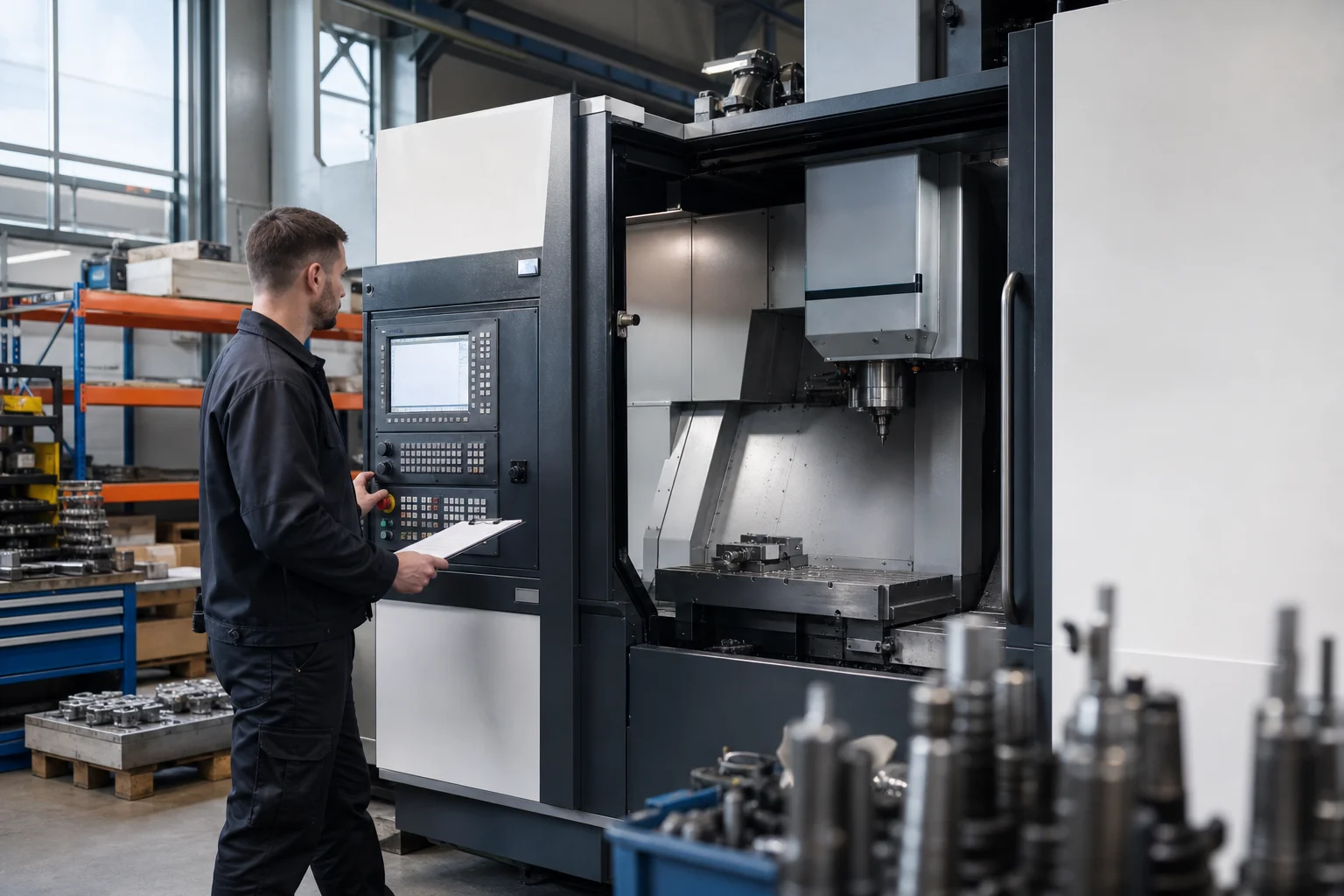
If you own a CNC machine in Poland and are trying to understand its value, the most important point is this: there is no single formula. The used CNC machine value in Poland depends on the machine’s technical specification, condition, service history, current demand in Europe and how easy it is to move, reinstall and put into production.
That means two machines of the same age can have very different market value. A well-maintained machining center from a respected brand with a desirable control system and a clean service record can attract far more interest than a newer machine that has had heavy use, poor maintenance or missing documentation.
What determines CNC machine value in Poland?
When owners ask about CNC machine valuation Poland, they are usually looking for a realistic selling range, not just a theoretical replacement cost. Buyers do not pay for the original invoice. They pay for a machine’s present usefulness, risk level and remaining production potential.
The main factors are:
- brand and model
- year of manufacture
- spindle hours and general usage history
- CNC control type and software version
- machine configuration and installed options
- mechanical and electrical condition
- service and repair history
- tooling, pallets, probes and automation accessories
- transport complexity, dismantling and reinstallation effort
- current demand in Poland and across Europe
Each of these influences buyer interest differently. Some improve usability and therefore support value. Others only help if the next owner actually needs them.
Brand and model matter, but they are not enough
Well-known brands often have stronger resale appeal because buyers trust the build quality, serviceability and availability of spare parts. That said, brand alone does not determine value. A high-end machine can still be difficult to sell if the model is outdated, poorly maintained or configured in a way that limits demand.
Model family matters as well. Within the same brand, some machines are much more sought after than others because they suit common workshop tasks, fit standard tooling ecosystems or are easy to integrate into existing production.
For Polish owners, this matters especially when selling into a wider European market. A machine that looks niche locally may still be attractive to buyers in other countries if it fits a common production need and can be transported economically.
Year of manufacture: useful, but not decisive
Build year is one of the first things buyers look at, but it does not independently define value. A newer machine is not automatically better, and an older machine is not automatically poor value.
Why? Because market value depends on actual condition and usability. A 15-year-old machine with regular maintenance, documented repairs and light, known production use may be more attractive than a newer machine that has had intermittent faults or lacks documentation.
The year is best understood as context. It helps buyers estimate design generation, control compatibility and expected wear, but it must be read together with hours, condition and service records.
Spindle hours: important, but not a full picture
Spindle hours are a useful indicator of use, but they do not independently determine remaining life. Two machines with similar hours can look very different if one ran under stable conditions and was well maintained while the other experienced poor lubrication, overheating or frequent alarms.
Buyers will often compare hours with:
- the type of work the machine did
- shift pattern and production intensity
- maintenance intervals
- evidence of major component replacement
- test results during inspection
High spindle hours can reduce interest, but they do not automatically remove value. Likewise, low hours do not guarantee a strong price if the machine has hidden wear, control issues or neglected maintenance.
Control system can materially affect demand
The CNC control is one of the most practical value drivers. It affects operator familiarity, software compatibility, uptime and the buyer’s ability to integrate the machine into existing production.
Machines with widely used controls often attract broader interest because operators and programmers know them, spare parts and support may be easier to source, and integration costs are more predictable. By contrast, an older or uncommon control can limit the buyer pool even if the machine itself is mechanically sound.
It is also worth noting that control software version, screen condition, battery status, backups and alarm history all matter. A machine with a good control but missing software documentation or backup files may still face price pressure.
Configuration and options: only valuable if the buyer needs them
Extra options can help, but they do not automatically add value euro for euro. A pallet changer, probe, high-pressure coolant, chip conveyor, rotary table, tool measurement or automation interface may increase usefulness. However, the market will only reward these features if they are complete, operational and relevant to the next user.
In practice, options add value when they:
- are common and proven
- are in working condition
- reduce the buyer’s future investment
- match the likely production use of the next owner
Options that are unusual, incomplete or difficult to support may add little. Sometimes they even narrow demand because the buyer does not want to maintain a complex setup.
Condition is often the biggest difference between asking and selling value
A machine’s physical condition has a strong effect on realized market value. That includes more than whether the machine powers on.
Buyers will look at:
- spindle noise and runout
- axis backlash and motion smoothness
- guideway wear
- lubrication system performance
- coolant system condition
- electrical cabinet state
- hydraulic and pneumatic systems
- leaks, corrosion and cleanliness
- safety systems and interlocks
- test cuts or dry runs where possible
Even small signs of neglect can reduce confidence. Cosmetic condition also matters because it often signals how the machine was treated. A clean, complete and orderly machine suggests lower risk than one with missing covers, damaged cabling or undocumented modifications.
Service history and documentation support value
A complete service history can make a major difference. Documentation helps buyers assess risk and verify that the machine has been cared for properly.
Useful documents include:
- maintenance logs
- repair invoices
- control backups
- manuals and wiring diagrams
- original specification sheets
- calibration or geometry reports if available
- records of major component replacements
This information does not guarantee a higher value by itself, but it reduces uncertainty. And in the used machine market, reduced uncertainty often translates into stronger buyer interest.
If records are incomplete, the machine can still be sellable. It simply means the buyer may discount for uncertainty or insist on a more careful inspection.
What buyers in Europe will consider when purchasing from Poland
Poland is part of a broader European used-machine market, so your buyer may be local or from another country. That widens the audience, but it also means transport and installation logistics matter.
A machine in Poland can be attractive to buyers elsewhere in Europe if it is technically sound, well documented and practical to move. At the same time, disassembly, loading, export preparation, rigging and commissioning costs can influence the final value more than owners expect.
For heavy CNC equipment, a buyer will often compare the machine’s technical appeal with the total cost of getting it running in their own workshop. A strong machine in a difficult-to-move format may be less attractive than a slightly smaller machine that is easier to transport and reinstall.
Asking price is not the same as market value
Many owners start with an advertised asking price they have seen online. That can be a rough reference, but it is not the same as a realized transaction price.
A listing price may reflect ambition, room for negotiation or a seller’s initial expectation. The actual selling value depends on the machine’s state, the urgency of the sale and whether the buyer can put it into production quickly.
The original purchase price also should not be treated as a guide to current value. A costly machine may have low resale value if it is obsolete, difficult to support or heavily worn. Conversely, an older machine can still have solid market value if it remains reliable and suited to current production needs.
How to think about value in practical terms
If you are preparing to sell, think in three layers:
- Technical value – what the machine can still do.
- Commercial value – how many buyers want that exact type of machine.
- Logistical value – how easy it is to remove, transport and recommission.
A machine with strong technical value but poor logistics may sell more slowly or at a lower net result than expected. A machine with moderate technical specification but strong demand and straightforward handling can be more attractive than its age alone suggests.
This is why used CNC machine price discussions should always be grounded in the actual machine, not only in the brand or build year.
Preparing your machine for a valuation
Before you request a valuation, gather the information a buyer will need. That makes the process faster and improves the quality of the assessment.
Try to prepare:
- machine make, model and year
- control type and software version if known
- spindle hours and axis hours if available
- current machine status: working, partially working or not running
- list of tools, accessories and automation equipment
- service and repair history
- photos of the machine, control, spindle, cabinet and serial plate
- details of known faults, missing parts or recent repairs
If the machine is still installed, clear photos and a short functional description can be enough to start. If it has already been disconnected, note whether transport and loading are included or still required.
When a professional valuation is useful
A professional review is especially useful if you are deciding whether to:
- sell the machine as-is
- invest in repairs before selling
- remove options to sell separately
- keep the machine for spare use
- replace it with newer equipment
That review should not only estimate value. It should also assess whether the machine is marketable in its current condition and which buyer profile is most likely to respond.
For owners in Poland, this can be particularly helpful because the buying pool extends beyond the domestic market. A proper assessment can show whether the best route is a local sale, a cross-border sale or a direct purchase opportunity through a specialist buyer network.
Machine.nl focuses on used CNC metalworking machines and supports owners who want a professional assessment before offering a machine to the market. In the right case, that can lead to a direct purchase opportunity or a structured sales route based on the machine’s actual specification and condition.
Conclusion
If you are asking how much your CNC machine is worth in Poland, the honest answer is that value depends on a combination of brand, model, age, hours, control, options, condition, documentation and demand. No single factor decides the outcome.
The most reliable way to judge the used CNC machine value Poland is to compare the machine’s present state with what buyers actually need and what it will cost them to put the machine back into production. That is why realistic valuation matters more than guesswork.
If you are ready to evaluate your machine, the next step is to collect the key machine data and request a professional review.