
How Much Is My CNC Machine Worth in Slovakia?
Learn which factors really determine used CNC machine value in Slovakia, from condition and control to service history, demand and transportability.
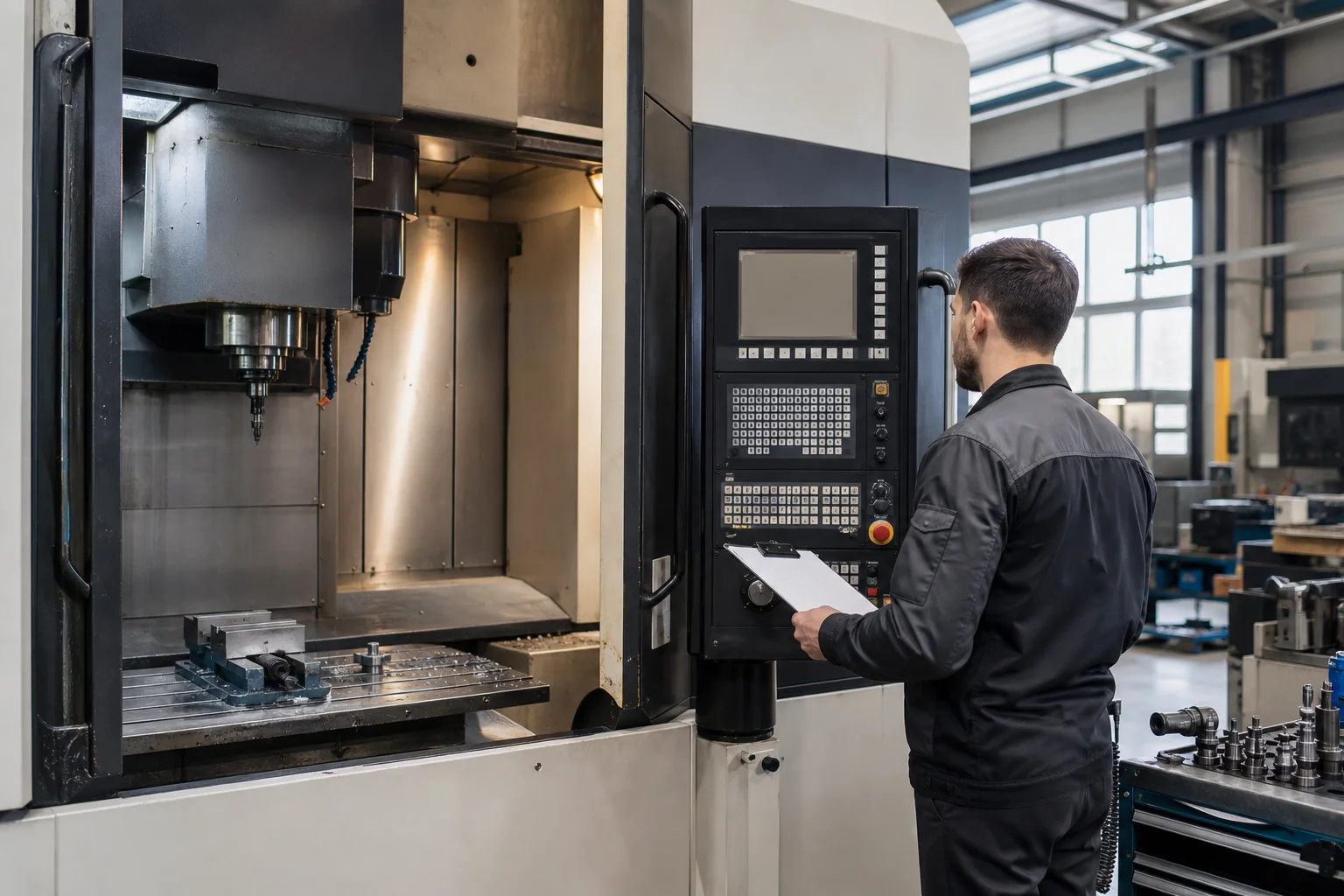
If you own a CNC machine in Slovakia and are considering a sale, the key question is not just what it cost new, but what it is realistically worth today. The answer depends on the machine’s technical specification, condition, documentation, marketability and the level of demand from buyers in Slovakia and across Europe.
For owners, a useful valuation is practical rather than theoretical. It should reflect how quickly a machine can be resold, whether it can be dismantled and transported economically, and whether it still fits current production needs. That is especially important for used CNC metalworking machines, where two apparently similar machines can have very different market outcomes.
What determines used CNC machine value in Slovakia?
The value of a used CNC machine in Slovakia is shaped by a combination of technical and commercial factors. No single factor decides the price on its own.
The most important elements are:
- Brand and model reputation
- Machine age and build year
- Actual condition and wear
- CNC control system and usability
- Spindle hours and overall operating history
- Axis travel, tooling and configuration
- Automation and options, where relevant
- Maintenance records and service history
- Transportability and installation complexity
- Demand from buyers in Slovakia and nearby countries
A machine with a respected brand name can attract attention more easily, but brand alone does not guarantee strong value. Likewise, a newer build year is helpful, but it does not automatically mean a high price if the machine has heavy wear, damaged components or outdated control hardware.
Why build year is only part of the story
Build year is often the first detail owners mention, but it should be treated as only one input. Two machines from the same year can differ significantly in value depending on how they were used and maintained.
For example, a machine used in light-series production with regular servicing may be easier to place than a younger machine that has seen hard shifts, poor maintenance or repeated downtime. Buyers look for confidence that the machine can go back into production without major uncertainty.
This is why a proper CNC machine valuation in Slovakia should never be based on age alone. The machine’s history and current technical state matter just as much.
Spindle hours matter, but they do not tell the full story
Spindle hours are useful because they give an indication of usage intensity. However, they do not independently determine remaining life or market value. A machine with moderate spindle hours can still be in poor condition if it has been overloaded, poorly maintained or exposed to contamination. A machine with higher spindle hours may still be attractive if it has been serviced correctly and remains mechanically sound.
Buyers and valuers will usually want to understand:
- Whether spindle hours are original and verifiable
- How the machine was operated in practice
- Whether the machine has had major repairs
- If there are signs of excessive wear in guideways, spindle, backlash or hydraulics
- Whether test cuts, alarms or accuracy checks reveal issues
That is why spindle hours should be interpreted together with physical inspection and service records, not as a stand-alone answer.
CNC control can strongly influence marketability
The CNC control is one of the most important commercial factors. Even a well-built machine can become harder to sell if the control system is outdated, difficult to service or unpopular with users.
Buyers often prefer controls that are:
- Widely known in the market
- Easy to operate and support
- Compatible with common programming and tooling workflows
- Backed by available spare parts and service expertise
A modern control does not automatically add value if the rest of the machine is weak. But an obsolete or failing control can reduce interest quickly, because the buyer must account for retrofits, downtime and risk.
When valuing a CNC machine in Slovakia, it is useful to list the exact control type, software version, screen condition, backup availability and whether the machine can still be tested properly.
Configuration and options: useful, but not always value-adding
Many owners assume that every option installed on the machine should increase its value. In practice, that is not always true.
Options can help when they are relevant to the buyer’s work. Examples include:
- Tool magazine capacity
- Live tooling or driven tools
- Subspindle or tailstock
- Probe systems
- Chip conveyor
- Coolant filtration
- Pallet changer or automation interface
- Higher axis travel or larger table size
However, options only add real value when they are complete, functional and useful in the market. Some extras are very specific to the original application and may not improve resale value much. A buyer may even prefer a simpler machine that is easier to integrate into an existing shop.
The same applies to accessories. Original manuals, chucks, steady rests, tool holders, measuring systems and spare parts can support a sale, but only if they are complete and in usable condition.
Condition and service history are often decisive
Condition is usually where a valuation becomes most realistic. Buyers do not pay for the idea of a machine; they pay for the machine as it stands today.
A useful evaluation should consider:
- Mechanical wear
- Accuracy and repeatability
- Spindle condition
- Axis backlash and motion quality
- Hydraulic and pneumatic systems
- Lubrication function
- Electrical cabinet condition
- Signs of crashes, repairs or improvised fixes
- Software and parameter backups
- Coolant and chip management condition
Maintenance history is equally important. Clear records of regular servicing, repairs and component replacements can support buyer confidence. Missing records do not automatically make a machine unsellable, but they increase uncertainty. That uncertainty usually affects value.
If a machine has been idle for a long time, that also matters. A machine that has not run recently may require recommissioning before it can be offered responsibly.
How current European demand affects Slovak machines
Slovakia is part of a broader European industrial market, which means the value of a used CNC machine is not determined only by local interest. Buyers may come from neighboring countries or elsewhere in Europe if the machine type is attractive, the condition is good and transport is feasible.
This cross-border demand can help owners because a machine that has limited local demand may still be suitable for a buyer abroad. At the same time, transport and installation costs become part of the buyer’s calculation. A machine that is easy to dismantle, load and ship often has better resale potential than a similar machine that is difficult to move.
Practical transport factors include:
- Machine weight and dimensions
- Whether it can be loaded in one piece or must be dismantled
- Availability of lifting points and transport documentation
- Need for special handling, rigging or packing
- Whether accessories and tooling can travel with the machine
For Slovak owners, this means valuation should reflect not only local workshop demand but also the machine’s broader European sale potential.
Why asking price is not the same as real value
An advertised asking price is not the same as a realized transaction price. This is one of the most common mistakes in used machine valuation.
Some sellers start high to leave room for negotiation. Others price a machine based on what they originally paid years ago, even though current market interest may be different. Neither approach is a reliable valuation method on its own.
A realistic assessment looks at:
- The machine’s actual technical state
- Comparable machines in similar condition
- The cost for a buyer to commission and transport it
- The urgency of the sale
- Whether the machine is complete and ready to inspect
This is why a professional review is often more useful than a general online estimate. It helps separate wishful pricing from an achievable selling range.
What information you should prepare before requesting a valuation
If you want to know your used CNC machine value in Slovakia, prepare a clear machine file. Better information usually leads to a more useful assessment.
Provide, if available:
- Manufacturer and exact model
- Build year and serial number
- CNC control type
- Machine type and main specification
- Spindle hours or operating hours
- Tooling, fixtures and included accessories
- Maintenance and service history
- Any known faults, alarms or missing parts
- Photos of the machine, control, spindle area and cabinet
- Whether the machine can be powered on and tested
If you have inspection reports, retrofit information or recent repairs, include those too. The clearer the picture, the more accurate the valuation discussion can be.
When it makes sense to consider a sale
Many owners wait too long. A machine that is still running but no longer fits production may often be easier to sell before it becomes obsolete, idle for too long or expensive to recommission.
A sale may be worth considering if:
- Production needs have changed
- The machine is underused
- A new investment is replacing it
- Control or spare parts support is becoming difficult
- The machine needs expensive repairs that no longer make business sense
Selling earlier can widen the pool of interested buyers, especially if the machine is still testable and documented.
How Machine.nl can help Slovak owners
Machine.nl is part of a European network focused on used CNC metalworking machines. For owners in Slovakia, that means a practical route to request a professional review of the machine and explore whether there is purchasing interest through the network, including the possibility of a direct purchase offer where appropriate.
The main advantage is that the machine is assessed in a commercial and technical context, not just by a generic listing formula. That helps owners understand whether they should hold, sell, or invest in preparation before offering the machine.
If you are planning to sell CNC equipment in Slovakia, a structured valuation is the best starting point.